Senior Triathletes 60+ Couch To Olympic Distance Training Plan: How to Race Stronger, Faster, and Smarter After 60

Updated: Sep 9
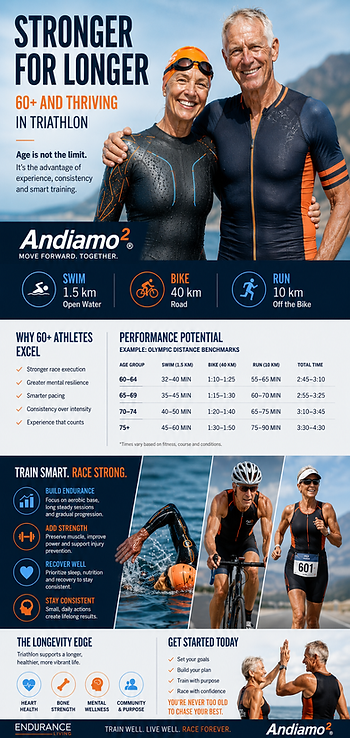
Aging doesn't mean slowing down—it means training smarter.
More athletes over 60 are entering Olympic Distance Triathlons than ever before, proving that endurance, resilience, and peak performance aren't reserved for younger competitors. The key is following a training plan designed specifically for the unique physiological needs of Senior Triathletes 60+.
The Andiamo²® 18-Week Olympic Distance Triathlon Training Plan combines evidence-based endurance training, strength development, strategic recovery, and expert coaching support to help older athletes achieve personal bests while protecting long-term health and performance.
Why Senior Triathletes Need a Different Training Approach
Many triathlon training plans are built around younger athletes with faster recovery rates and higher training loads.
For athletes over 60, success comes from balancing performance gains with recovery, injury prevention, and sustainable progression.
This 18-week Olympic Distance Triathlon Training Plan is specifically engineered for senior endurance athletes who want to improve fitness, maintain strength, and arrive at race day healthy, confident, and prepared.
What Makes This Olympic Triathlon Training Plan Different?
Strength Training for Bone Health and Muscle Preservation
One of the biggest challenges athletes face after age 60 is maintaining muscle mass and bone density.
This plan incorporates targeted resistance training designed to:
Improve bone strength
Preserve lean muscle tissue
Enhance power production
Reduce injury risk
Support healthy aging
Strength training isn't optional for senior athletes—it's essential.
Smart Periodization Designed for Athletes Over 60
Recovery becomes increasingly important with age.
That's why this program follows a proven 2:1 Work-to-Recovery structure:
Two weeks of progressive training
One week of strategic recovery
This approach allows fitness adaptations to occur while minimizing fatigue, reducing burnout, and lowering the risk of overtraining.
The result is steady, sustainable improvement throughout the entire 18-week build.
Aerobic Endurance Without Excessive Fatigue
Endurance remains the foundation of Olympic Distance Triathlon success.
The training plan emphasizes Zone 2 and Zone 3 aerobic development to:
Improve cardiovascular efficiency
Increase endurance capacity
Enhance fat utilization
Support long-term recovery
Rather than relying on constant high-intensity sessions, the program prioritizes training that builds fitness while protecting recovery resources.
Strategic VO2 Max and Speed Development
Speed still matters after 60.
Research consistently shows that high-intensity training helps preserve aerobic capacity and performance as athletes age.
This plan strategically includes:
VO2 Max intervals
Tempo sessions
Race-specific efforts
Controlled speed development
These sessions are carefully placed within the program to maximize performance gains without excessive physical stress.
Race-Day Nutrition for Senior Endurance Athletes
Training is only part of the equation.
Successful Olympic Distance Triathlon racing requires effective fueling and hydration strategies.
Throughout the plan, athletes learn how to optimize:
Daily nutrition
Recovery fueling
Hydration protocols
Electrolyte replacement
Proper nutrition supports both performance and healthy aging.
Neuromuscular Training for Better Efficiency
As athletes age, maintaining coordination, reaction time, and movement efficiency becomes increasingly important.
This plan includes neuromuscular activation drills designed to:
Improve movement economy
Enhance transition performance
Refine triathlon-specific skills
Improve overall athletic efficiency
Small gains in efficiency often lead to significant improvements on race day.
Advanced Features Built for Modern Triathletes
Auto-Synced Workouts
Every workout automatically syncs with compatible training platforms and devices, including Garmin, Zwift, and other popular endurance training systems.
No manual programming. No guesswork.
Simply follow the workout as prescribed.
Precision-Based Training Metrics
Train with confidence using:
Heart rate zones
Power-based training
Structured workout targets
Objective performance tracking
These metrics help senior athletes train efficiently while avoiding unnecessary fatigue.
Expert Video Coaching
The plan includes educational video content covering:
Swim technique
Strength training execution*
Each lesson is tailored to the specific needs of athletes over 60.
Prepare for Real Race-Day Conditions
Confidence comes from preparation.
That's why the program incorporates:
Open-water swim sessions
Progressive brick workouts
Transition training
These workouts simulate real-world race demands and improve execution when it matters most.
Who Is This Training Plan For?
This Olympic Distance Triathlon Training Plan is ideal for:
Senior Triathletes aged 60+
Athletes returning to competition
Active adults seeking a new challenge
Experienced triathletes pursuing a personal best
Competitive athletes targeting podium performances
Whether your goal is crossing the finish line or standing on the podium, this plan provides a clear roadmap to success.
Frequently Asked Questions
Can you train for an Olympic Triathlon after age 60?
Absolutely. With proper programming, recovery, strength training, and nutrition, athletes over 60 can successfully complete and compete in Olympic Distance Triathlons.
How many weeks should a senior athlete train for an Olympic Triathlon?
An 18-week structured training program provides enough time to develop endurance, strength, speed, and race-specific fitness while allowing appropriate recovery.
Is strength training important for triathletes over 60?
Yes. Strength training helps maintain muscle mass, improve bone density, reduce injury risk, and support overall endurance performance.
Should senior triathletes do high-intensity training?
Strategically programmed high-intensity sessions such as VO2 Max intervals can help maintain aerobic capacity and speed. However, they should be carefully balanced with recovery.
Train Smarter. Race Stronger.
Your best performances may still be ahead of you.
The Andiamo²® Senior Triathletes 60+ Olympic Distance Training Plan combines science-based endurance training, strength development, recovery-focused programming, and expert coaching support to help you perform at your highest level.
Age is not the limitation.
Your training strategy is.
Start your 18-week journey today and discover what is possible when experience meets intelligent training.
Got Questions? That's what our email coach support is built for. We expect them. Ask A Coach Anything About This Plan
Follow us on Facebook!
Thanks for reading.
*muscle and motion app required